
| Original Release Date | Nov 3, 2009 |
|---|---|
| Distributor | Aderet Music Corp. |
In the wake of his very successful, celebrated new CD 'YOVOH,' Yerachmiel was asked by over 50 periodicals and websites for interviews. Many were granted, but one interview stood out.
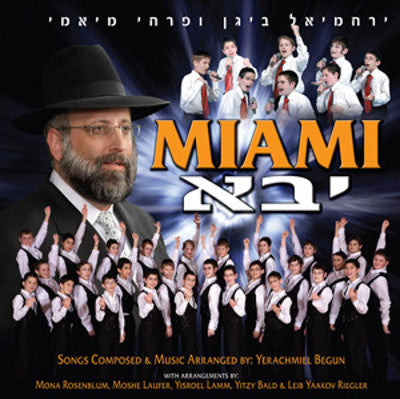
YAVOH is not just another album release. With 11 unreal songs, superb arrangements, standout vocals, and the theme of Emunas Hashem, it sets the bar high for those who will follow. YAVOH is an album for our times, and reminds us how contemporary Jewish music should be.
Country Yossi
The following are excerpts from an interview with Yerachmiel Begun given by Mendele Shoichet of Jewishmusicreview.com. You can hear it on the site.
JMR: Welcome to inside scoop on the Jewish music report. Today I have the honor to welcome a very special guest, Yerachmiel Begun of the Miami Boys Choir. Yerachmiel, we are so excited to have you, thank you for joining us.
YB: Thank you for having me, great to be here.
JMR: First of all, I want to wish you a hearty mazel tov on the release of the new album YAVOH, its release has long been anticipated, and it certainly does not disappoint. Yerachmiel, I get the feeling with MBC albums, and Yavoh is no exception, that they are not mere compilations of random songs, but rather the songs fit a certain theme or vision, both musically and lyrically. In Yavoh for example, I noticed the theme of Emunah throughout the album, seemed very strong. My question therefore is, was that an intended theme, and if so, why did you choose that theme?
YB: Well yes, you are very perceptive in your understanding of the music. You are tapping into what we do in the Miami albums. There usually is a thematic feel. Now sometimes the theme is conceptual, and sometimes the theme is musical. And sometimes both. For example, going back many years, to the Shabbos Yerushalayim album, an album from 1992 or so,
JMR: I remember it as a kid.
YB: Yes….. There were a lot of songs relating to Yerushalayim, and alot of songs about Shabbos. That was on the surface. On a deeper level, there was the Kedushas Shabbos and Kedushas Yerushalayim. For example, The We Need You song, which is about talking in davening, which came from really… that’s the inspiration you get when you hear too much talking in shul on Shabbos. But during the week, you should know, it’s interesting; there is not that much talking. Because people are coming and going. You know, the Yetzer Hora works very well on Shabbos.
But getting back to the Yavoh album, the theme of Emunah, especially in our difficult times, that aspect is there….. Certain feel to the melodies and the music was what I wanted to come across with. So yes, there was a thematic approach on different fronts.
JMR: Actually, that is something that was interesting that even though you have a lot of styles going on this album, yet, at the same time, there was a consistent feel that all the different styles managed to fit together very well, as a whole.
YB: Yes, because, first of all, when you first start, you make songs, and build an album…sometimes you have songs left over from previous albums. But this album was a little bit different, because I started completely fresh with no songs from before and I had an intention in my mind to find a middle ground in the world of Jewish music. And that middle ground I felt was not hit yet. Meaning to say, where the melodies are good melodies, authentic songs, the type of songs people can sing, and have a Hisorirus, and make people inspired. At the same time, on the middle road, there is a ‘currentness’ in the melodies and the arrangements.
Even in melodies there is such a thing as being current, without stepping over the line. For example, there is such a thing as a ballad which is from today’s times and from many years ago, but both quite different
JMR: With different feels.
YB: Yes, it has to do with the music, the chords, and different aspects. For example, lets look at the RACHEM song, the old one, and then we have the new one done recently by Shwekey. The style of the song is more current, but they are both heartzidike songs. There are no influences in that new song, that anyone would say would not be proper. But yet styles change within the music; there is a ‘currentness’. So that is what we tried to do, find a middle ground, where its not too far to the left where the influences are not proper perhaps, and not too far to the right where its a little too right wing,
JMR: It’s a very fine balance too, staying current without losing the Yiddishe feel to it.
YB: Definitely. I once spoke to a storekeeper 7 or 8 years ago we were having a similar discussion at that time, I don’t know which album it was, and he was telling me that he had a store in Flatbush that sold woman’s clothes, and he told me, he too, had to strike a middle ground. It had to be a certain type, up to date, but still had to be correct….. So when we are dealing with our community, and these sensitivities, it is important to strike a middle ground, if you are aiming to be mainstream, where both sides can be comfortable and identify with it.
JMR: For the benefit of those unfamiliar with what goes into the production of an album, or maybe even for those that are, since choral production offer some complexities that aren’t present with recording and producing the individual artist; maybe you can touch a little bit the work that went into producing this outstanding album.
YB: The way that I make it there are multiple elements to put together, and it’s the most difficult thing there is in Jewish music to combine. No. 1 there are solo voices, myself and the boys, the boys choir, and adult choir at times, a boys group ensemble, duets, trios…so many vocal elements and variety……..on the music side, the music on the MIAMI albums are also very full. There are albums that come out that basically just are rhythm. Just drums and guitars, electronic type music. And there is very little of the strings, brass, and other aspects. The thing about the MIAMI albums is they are usually very orchestrated. On this album we tried to get the best of both worlds; very rhythmic in the fast songs, plus orchestrated. So a Miami album is probably the most difficult album to do and to mix; mix being the final stage where everything has to be balanced out, and you have to be able to hear them. A singer’s album is a breeze compared to this, because there is space for it cut through much easier. So getting all the elements to work right is one of the secrets that make a Miami album work well.
JMR: A lot of people hear the album, and it’s a beautiful sound, and they might not realize the tremendous effort that has to go into it recording one song, let alone all the work of an entire album.
YB: The truth is it takes a lot of hours, and a tremendous amount of money to do most full albums. There is so much time and Koach and thinking and creating that has to go into the process of recording, besides the actual songmaking. It never would be financially worth it for a producer of any major album. But it’s a labor of love, for most people in Jewish music.
JMR: Do you find there are any songs on the new album, that the boys in the choir connected to most?
YB: Well, it’s interesting, because when you teach a song the first time, they hear it, and you get their reaction. You come back the next week, and there is a certain excitement if the song was decent from the previous week. They are all into it, but sometimes only till you get to the next song. On this album there are 11 songs, but I taught them 14, 15 songs. So extra songs didn’t make it, which happens alot of times. I remember one time, I taught one song to them and the kids were very excited about the song. The next week I taught them another new song, and then we reviewed the previous week’s song. After the rehearsal, one boy came up to me and said respectfully, “You know last weeks song (which he had loved) wasn’t so good, this song is much betterâ€. But in truth, on this album, people are saying they are having a hard time picking the best songs, because there are so many powerful pieces.
JMR: I definitely agree with this, my own family was connecting to about every song on the album.
YB: Yes, and my choir is also really a bunch of customers as well – they are sophisticated, but listeners as well.
JMR: All of us growing up, electrifying performances have always been synonymous with MBC. So it was exciting for me to hear that the Miami Experience was being re-instated for Pesach.
YB: It’s called the ALL-NEW MIAMI EXPERIENCE. It wasn’t called Miami Experience 6, (after the original 5 from 1991-1995), and not called the return of the Miami Experience. Because it will be a total new type of MIAMI performance, never seen before in any Miami show, or any Jewish music show.
JMR: Lately a lot of shows are putting a lot of thought into the staging, which I feel you have been doing for decades. So in light of the new advances in Jewish show production, maybe you can clue us in on some of the things we will see at the NEW EXPERIENCE.
YB: A Miami show has always been about more than just singing. The aim has been always to inspire, to entertain in a Torahdike way, and with an approach to reach out from the stage and make a real connection to the audience.
Yes there has been a lot of extra effort by singers to embellish their shows, and that is good, but I would say that some people get a little distracted from the real reason people come to concerts. And that is to hear great songs. No matter how good of a voice you have, they will not come- because they want to hear songs they love and listen to and identify with. On the albums, sometimes they get away from the basics. So it’s important to keep the focus on what’s most important. And to connect to the audience.
I spoke to a popular singer a few years ago, and he shared these same thoughts and added, that a lot of the wildness and other things going on in Jewish music is a cover up for lack of good songs. He said, look at a Carlebach song that was recently discovered, everyone loves it, and it’s so simple and popular.
JMR: No fancy dressings, but yet the Tochen is there.
YB: Yes. Now, there is truth that the people want the music to be contemporary, no question; so striking the balance is key. And so, whatever we do onstage is usually an extension of the songs. So what we will be doing with the NEW MIAMI EXPERIENCE is take the root, the songs, and expand it into a staged production with new technology and new ideas that will set the bar for all future shows.
YB: The original M.E. shows were really a standard Miami show, but with many added aspects to the show. This time we begin the Miami Experience again, with a total new styled show from MIAMI ITSELF a fresher, updated approach to a staged production. That is the starting point for the new MIAMI EXPERIENCE. And after a long winter, it will be a welcome treat for us all.
JMR: Yerachmiel, for me, one of the highlights of MBC has always been your ability to find talent that stands head and shoulders above the crowd. Some of the soloists of the past have blossomed under your wings, so to speak, to the point where they were able to capitalize on their tenure with MBC., and help launch their solo careers. Are there any soloists that are in your current lineup that have you excited for their potential for the future?
YB: That’s a difficult question from the point of a technicality. Its impossible to know which boys voices will come back after they lose it at an age of 13 or 14 or so. We have had great soloists in the past, but their voices never came back great when they were older. So, I am focused on how I can bring out their talent to the max now. True, we see many Miami Alumni go on to singing careers to diff. degrees. (And of course there is a Miami Alumni group, that recorded an album and is coming back for this show). So from a practical point, when a boy joins at say 9 years old, the talent is raw, and the work is to bring out that talent which takes quite a while.
JMR: After over 30 years MIAMI is going stronger than ever, while other groups have come and gone. What would you attribute that to?
YB: If we talk about the auto industry, we hear that some companies are doing ok, despite the economy. Others are looking for handouts. And they are taking bailouts and still won’t sell cars. So the answer is, like anything else – what you are putting out there. That’s no. 1. And the second thing is, the ability to modify and change over time. That is something that one hit wonders don’t have that ability to do. Sometimes the first album is great, but the second one, no one is interested in. And besides other reasons that it might have fallen short, like poor song choice, additionally, they might have put out the album with the same color as the first.
JMR: Kind of the same album, different songs.
YB: Right, and people pick up on that, they say, well, there’s nothing so good here etc….they sense something has been replicated. Whether from the point of songs, music, or the way they sing it. Gilah renah deetzah and chedvah, are 4 types of joy. Each one different, What exactly is meant by it? Music and art is an expression of feeling. So that means a composer and singer needs to reflect different emotions. To feel those emotions, which is part of the concept of soul.
I grew up on the earlier Pirchei albums where every song was unbelievable and that was the standard, and those songs survived the test of time. They had real soul. So that aspect and the ability to change, yet stay true to yourself, I think, are the keys to longevity.
JMR: On the same lines, one thing I always felt was a big part of MBC, the ability to change and adapt- was your songwriting. Boruch Hashem, you have the ability to pen songs that are very memorable, the albums always seem purposeful; as apposed to sometimes we see albums have a couple of hits and that’s pretty much it. With the MBC albums its hit after hit after hit. So perhaps you can talk about your approach to songwriting and how you keep it fresh?
YB: That’s the most difficult question to answer for a composer, because he doesn’t have the answer always. If I would have asked Shlomo Carlebach how did you make that song, or bring it out, I am sure he would have answered ‘holy brother, its mamesh a gift from Hashem’. So, when we are talking about Neshamah, and uniqueness of song, that is sort of a piece of your Neshama, it’s the deepest of the deep, like he would have said.
Most of the time I compose its based on a specific emotion at the time….. If I am not feeling anything real at the time, nothing good will come out. But the source of the songs come from my Torah learning and Yeshiva background; and that affects the originality as well as the quality. I will tell you a little story that brings out this point.
My Rosh Yeshivah, when I learned in Mir was Reb Shmuel Birnbaum Ztl. One day, when I was about 20 years old, I was in the Bais Medrash, and was talking to someone, not in learning. Suddenly, I felt a tap on my shoulder. The Rosh Yeshiva wanted to speak to me in the back of the Bais Medrash. I followed him there, and he said to me, ‘ I see you are not making good songs’. I asked him to explain. He said, ‘ If you are not learning well you are not making good Nigunim.’ (‘ Oib du learnt nisht gut du macht nisht kain gutta nigunim’ were his words). Well, he was right, for me at least. Because my songs were coming from there. A lot of kids today who compose, and we have a lot of talent today, if they come out of a Seder of learning, and they hit the guitar or keyboard, and make a good song……..where are they drawing from? They are drawing from that freshness that Ruchniyus…the same thing applies to singing. I went to Camp Agudah when I was younger, and someone on Shabbos got up to say a Dvar Torah, and then everyone broke into song. What was that about? The same idea. It all depends what we fill up ourselves with.
JMR: Your music connects you to the deepest depths of your soul.
YB; Yes, but the question is, like someone once said to me, that depends on what kind of soul you have. A person’s Neshama is affected by what they do and what they want to be at their best….music represents that. Someone could create very modern music and sing with soul…..but its their soul. No one is perfect we all have our weaknesses. But what do we aspire to…..if we think about what song is…it is the perfection of a person. It’s the purity of the best of a person.
JMR: Being that the music is a reflection of their essence, to really think about what they are putting out there. It’s a big point of inspiration, but the scary thing is, it can inspire either way.
YB: Yes, that’S the Achrayos of the people who are doing it - and not to kid themselves, and not to kid others. Those who say JM can be comprised of anything, so long as it's composed by a Jewish person, are misleading themselves and the public. That reasoning is just an excuse, and a justification to be able to do anything they want and label it 'Jewish.' Rabbonim have been insisting for some time that music has a potent power - one that shouldn't be misused. They want Torahdike music – not just Jewish music. That's where music really belongs, and where it should be kept.
JMR: Getting back to the album, we hear the boys on this album singing like pros. They know how to sing with the right feeling, and bring out the melody. Is that something that is taught, or comes naturally?
YB: I believe that it’s a natural thing, even in adults. You can’t teach someone to sing with soul and Neshama, and reach people. It’s an inborn thing. To share a piece of yourself. Once there was a producer who told me that a singer he knew had a problem. He said, this singer, ’ would be looking at himself sing while singing’. A great example of non connection. All you can do then, is work your hardest to get the boys to use their natural talent in the best possible way.
JMR: Yerachmiel, we wish you Arichas Yomim and Shonim Tovos to keep bringing us the best in Jewish entertainment and impacting our lives though your music.
YB: Thank you.


